
Avoiding Panel Upgrades with Black Box
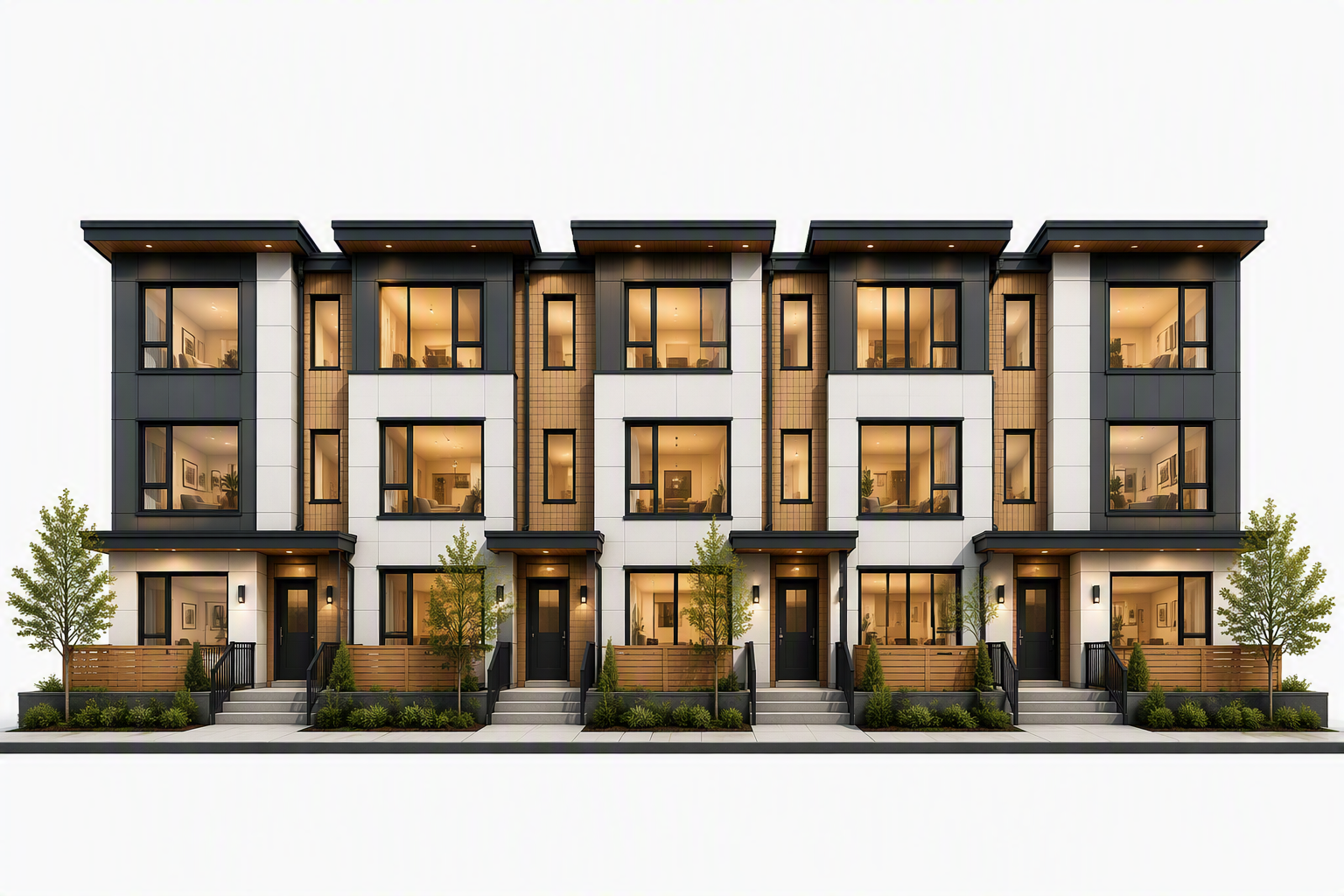
As homeowners continue to electrify their homes with EV chargers, heat pumps, air conditioning systems, hot tubs, and other high-demand devices, many encounter a common challenge: limited electrical capacity in row housing, town homes and apartment complexes.
In this townhome installation, the home's electrical infrastructure had already reached its load calculation limit. The homeowner wanted to future-proof their property while adding new electrical equipment and maintaining flexibility for future upgrades.
Using the Black Box Multi-Residential Hub paired with local PCS controller, the installation team was able to intelligently manage electrical loads, tap into additional usable capacity, and avoid the significant expense of upgrading the entire electrical service for the property.
Project Background
Location: Calgary, Alberta
Building Type: Multi-Residential - Row House or Town
House
Challenge: The home contained multiple sub-panels and
had very little remaining electrical capacity available. Additional high-demand
electrical loads would have placed unnecessary strain on the system and limited
future expansion options.
The homeowner wanted a solution that would support both
current and future electrical needs while avoiding the cost, disruption, and
permitting requirements associated with a service upgrade.
Goal: Access the existing usable electrical capacity
safely through intelligent multi tiered load management, allowing the homeowner
to install and operate multiple high-demand electrical devices safely and
efficiently.

Solution: Black Box Multi-Residential Hub with Dedicated Electrical Services
The Black Box Multi-Residential Hub was selected to provide real-time energy management at the home's main electrical service.
Installed at the 200A main service, the Hub continuously monitors overall electrical demand and intelligently manages the local Black Box PCS-240-50-100 controller to manage the loads globally. This allows homeowners to access the capacity of their existing electrical infrastructure without compromising safety or performance for anyone in the associated building.
The system was designed to support:
- EV charging equipment
- Air conditioning systems
- Heat pumps
- Hot tubs and spas
- Water heating equipment
- Future electrification projects
- Additional high-demand residential loads
By dynamically managing available power, the Black Box Hub allows multiple electrical devices to coexist on a constrained service while preventing overload conditions. It is also unique as it doesn't require its own power source where the electrical service for the building is located. For example in a row house there is often a multi gang meter base where the service comes into the property but no power source at that location. Our HUB can be installed at that location with no local power source and work seamlessly while connected to our Power Control Products. This saves unnecessary electrical complexity, time and cost.
Installation Process

1-Load Assessment & Planning
Dedicated Electrical Services performed a Canadian Electrical Code-compliant load calculation to determine available service capacity and load mitigation requirements. It was discovered that a Black Box Multi-Residential Hub coupled with a EVEMS240-100 was needed for the installation.
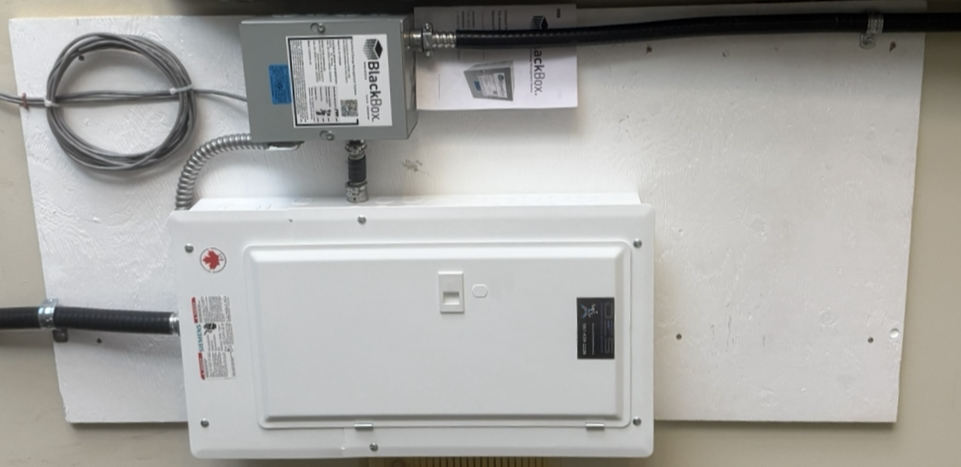
2-Mounting & Wiring
The Black Box HUB and EVEMS was installed and is monitoring the main electrical panel feeder lines. A EVEMS240-100 is installed at a secondary suite panel with the end device circuit routed through the device for direct load management.

3-Testing & Verification
Using the VT-101 verification tool, technicians simulated peak load conditions to confirm the HUB & EVEMS each safely interrupted and restored power to their respective controlled devices as designed.
Interested in Smart Energy Management?
Skip the panel upgrade. Keep the comfort. Schedule your installation with Dedicated Electrical Services.
Contact Dedicated Electrical Services for a consultation.